
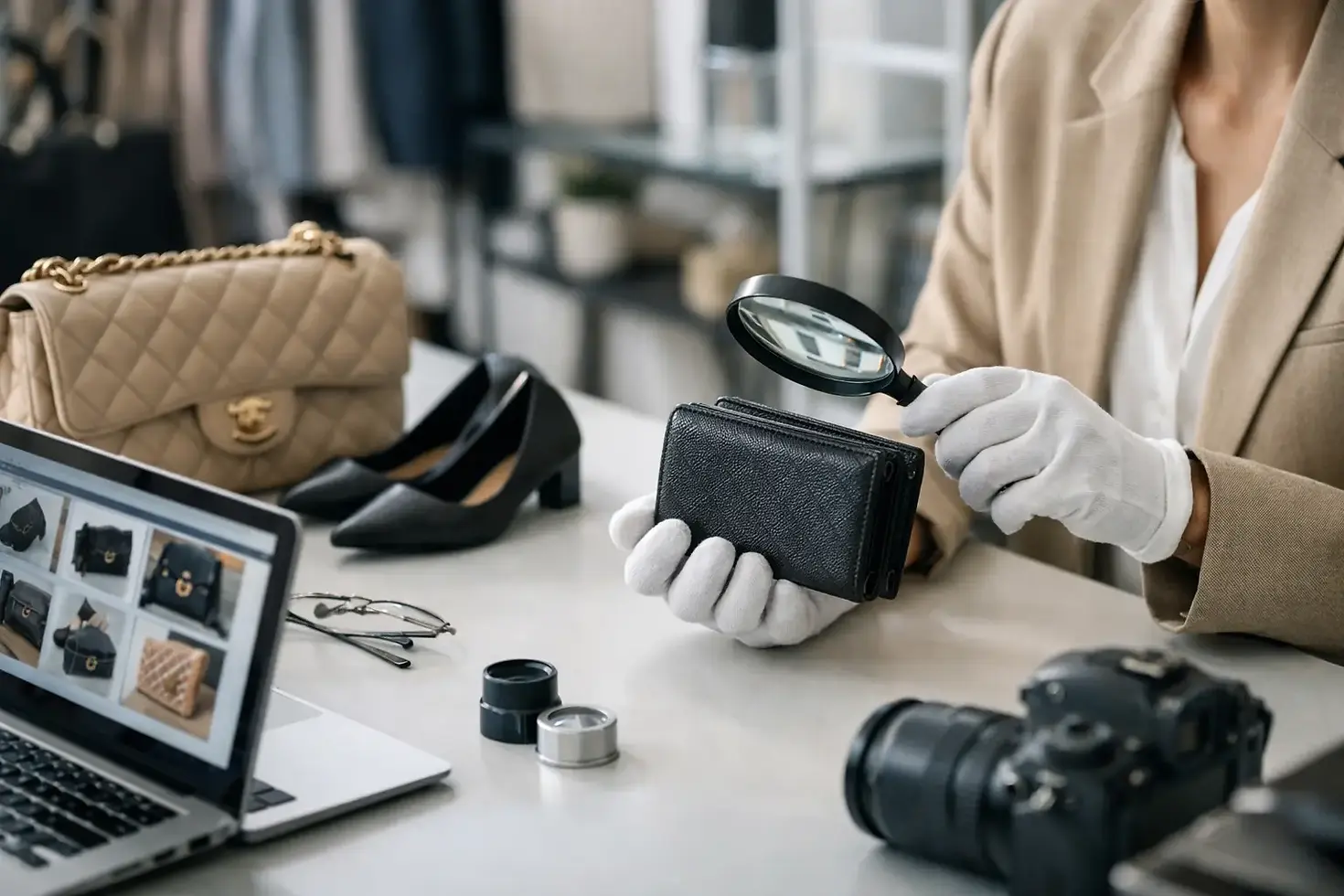
How the Designer Authentication Process Works
A luxury purchase should begin with certainty, not a leap of faith. A thoughtful designer authentication process gives international clients a clear view of where an item comes from, how it has been assessed, and what they are approving before it is purchased or shipped.
For a current-season handbag, a rare size from a designer outlet, or a gift selected from Italy, authenticity is more than a promise attached to a product page. It is a chain of evidence and careful judgment. The strongest process begins long before an item reaches a box.
What designer authentication actually means
Authentication is often reduced to a quick check of a logo, serial number, or label. Those details matter, but they are only part of the picture. Genuine designer goods are evaluated through a combination of provenance, construction, materials, brand-specific details, and transaction records.
The most reliable question is not simply, “Does this look authentic?” It is, “Can the item’s journey be accounted for?” A piece sourced directly from an established Italian boutique, authorized retailer, or certified designer outlet begins with a materially stronger foundation than an item whose ownership history is unclear.
This distinction is particularly relevant when shopping remotely. Product images can be reused, descriptions can be incomplete, and even convincing packaging can be copied. A private sourcing service should replace that uncertainty with direct access, clear communication, and documentation that matches the specific item being considered.
The foundation: verified retail sourcing
A considered designer authentication process starts with the store, not the stitch. Before sourcing begins, the retailer itself should be known and verified. Established boutiques, official brand retailers, and certified outlets operate within the legitimate luxury retail ecosystem. Their inventory is acquired through authorized channels, even when an outlet piece comes from a previous collection or is offered at a reduced price.
That does not mean every authentic item will look identical to a current boutique release. Outlet merchandise may have a different season, packaging variation, or price structure. A limited-edition piece may arrive with distinctive details. The point is not to force every item into one visual template. It is to understand its retail origin and assess it in context.
For clients sourcing through Italy, this also means working with people who understand the local retail landscape. Some boutiques carry highly selective inventory. Some designer outlets receive stock in limited deliveries. A trusted concierge knows which locations are appropriate for a request and when an item’s availability or condition deserves closer review.
Reviewing the exact item, not a stock image
Once a suitable piece is located, the next stage is inspection of the exact item. This is where real photographs become essential. A client should be able to review the actual bag, shoe, garment, or accessory proposed for purchase, rather than relying solely on editorial campaign imagery or generic e-commerce photos.
Clear photographs can show the overall condition, color, hardware, labels, interior markings, stitching, and included accessories. They also allow a client to confirm practical details that matter just as much as authenticity: the precise shade of leather, the size marking, the finish of the hardware, or whether a garment’s cut feels right for the intended wardrobe.
For higher-value pieces, a more detailed review is appropriate. This may include close images of date codes or serial references where relevant, care labels, internal stamps, dust bags, authenticity cards, and the original retail packaging. Not every brand uses the same system, and not every authentic item includes every accessory. A card alone is not proof. Its value lies in how it corresponds with the product, the brand’s practices, and the source of sale.
How expert review looks beyond obvious details
Authenticators and experienced luxury buyers look for consistency. They compare the item’s details with what is known about a particular brand, style, season, and production method. Material quality, engraving, typography, alignment, edge finishing, closures, lining, and construction all contribute to the assessment.
Yet caution is needed here. Luxury houses change small details over time. Fonts are updated, country-of-origin labels vary by production run, and certain models are made in more than one facility. An authentication process that treats a single online checklist as final proof can create false confidence or reject a genuine item for the wrong reason.
Context is what makes expertise valuable. A vintage piece, for example, should not be judged by the standards of a current model. An outlet item should not be assumed suspicious because its packaging differs from full-price boutique stock. The objective is a clear, informed evaluation, not a theatrical search for flaws.
Documentation and purchase records
After the item has been approved, the transaction should remain traceable. A retail receipt or invoice is a meaningful part of the record because it connects the product to a legitimate point of purchase. It is not the only evidence, but it reinforces the source history established at the beginning of the process.
Clients should also receive clarity about what is included with the purchase. This can mean the item itself, its original packaging where available, retail documentation, and any relevant boutique materials. Expectations should be stated plainly, especially with outlet inventory, where packaging or accessories may vary.
Discretion matters as well. A luxury service should handle personal details and purchase records with care, while still offering clients the information they need to feel secure in their decision. Transparency does not require oversharing. It requires accurate, relevant proof at the right moments.
Approval before purchase protects the client
The most client-centered part of the designer authentication process is the approval stage. Instead of purchasing on assumption, the client reviews the real item, details of condition and availability, and final pricing before the order is confirmed.
This is especially valuable for pieces with natural variation. Leather grain, handmade finishing, and fabric placement can differ from one item to another. A personal approval step turns those variations into an informed choice rather than a post-delivery surprise.
It also creates room for questions. Is the item from a current collection or an outlet? Does it include the original box? Is there a small characteristic of the leather or hardware worth noting? A refined service treats these questions as part of the purchase, not an inconvenience after payment.
At Vivaly, this private request-and-approval model is designed to keep the client close to the decision while making the Italian sourcing process feel calm and considered.
Delivery is part of the chain of trust
Authentication does not end at checkout. Once a luxury item has been purchased, careful handling, insured shipping, and traceable delivery protect both the piece and the client’s confidence in the transaction.
For international orders, clear communication about dispatch, tracking, and delivery expectations is essential. The best approach depends on the item’s value, destination, and customs requirements. A small accessory and a high-value handbag may require different levels of insurance and packaging, but neither should be treated casually.
Keep your records after delivery, including the invoice, approval photographs, shipping details, and any supporting documentation. These materials can be useful for insurance, resale, gifting, or simply maintaining a well-documented wardrobe.
What to ask before committing to a purchase
Before authorizing a designer purchase from abroad, ask where the item is being sourced, whether you will see real photos of the exact piece, and what documentation will accompany it. Confirm its condition, included packaging, final price, and delivery method.
Be cautious of anyone who pressures you to pay before providing clear answers or who relies only on phrases such as “guaranteed authentic” without explaining the source. Confidence should come from a process you can understand, not from a slogan.
The most worthwhile luxury purchases have a certain quietness to them. You know the piece was selected intentionally, reviewed carefully, and delivered with its story intact. That is the kind of assurance that lets you enjoy it from the first unboxing onward.


Comments